
'From data on enquiries, we can build what we call a data lake or a data warehouse where data is classified into various cohorts and then we use AI and ML tools to predict demand down the line.'

The bottom lines of several private sector banks have taken a hit following the recent guidelines released by the Reserve Bank of India (RBI) on alternate investment fund (AIF) investments. Last month, the RBI announced that regulated entities, such as banks, non-bank lenders, and home financiers, cannot invest in AIFs that have directly or indirectly invested in companies that have borrowed money from the lenders. In case an entity had already made such an investment, they must liquidate the investment or make 100 per cent provision, RBI had said.

'Now that we are a pure-play India business, many investors are open to investing.'

Delhi-headquartered Fortis Healthcare is open to acquisition of hospitals with over 250-300 bed sizes as part of its strategy to grow at a faster clip. It may also opt for a neutral brand name soon. Neutral brand is a new brand, which is not owned by any of the stakeholders.

The Indian pharmaceutical market (IPM) grew 6.8 per cent to touch a turnover of ~1.93 trillion in calendar year 2023, despite volumes going down marginally by 0.9 per cent. This indicates the price increase has been the major growth driver. Growth in the moving annual turnover (the previous 12 months' turnover) in December was 5.1 per cent and that in new product introduction 2.6 per cent, while volumes dipped 0.9 per cent, leading to an overall growth rate of 6.8 per cent, according to the data from market research firm Pharmatrac.

Funds raised by India Inc. through offshore loan syndication hit a 15-year high in 2023 with companies and banks raising $21.4 billion, the highest since 2007. The momentum is expected to continue in 2024 as well with over $4 billion fund raising expected in the first three months of this year. Companies raise funds, both onshore and offshore, depending on interest rates and activities. Funds raised offshore can be deployed in overseas activities.

The demand for buses largely remained robust in 2023, driven by the increasing need for public mobility and replacement. Ashok Leyland Limited (ALL) recorded a 64 per cent year-on-year increase in sales of medium and heavy commercial vehicle (MHCV) buses during the April-to-December period of 2023 to 11,216 units. Volvo Eicher Commercial Vehicles (VECV) posted 24.7 per cent sales growth between April and December for light and medium-duty buses, and 36.9 per cent growth for heavy-duty buses.

'There is no reason why we should break this business up.'

'We have a plan to plough back a 'This year in the first half we had profits of more than Rs 31,000 crore.' significant amount of profits this financial year.' 'We have seen this organic plough back of profit is one of best ways to support the equity of the bank.'

Rising penetration of trade generic medicines is eating into the value growth of the domestic pharmaceutical market, showed a recent analysis. According to a Kotak Institutional Equities analysis, 70-110 basis points (bps) annual dent is expected from trade generics and Jan Aushadhi on Indian Pharma Market (IPM) growth at least until FY27-28 (see chart). Trade generic medicines are those that are not pushed into the market through doctor promotions.

As of now, Gennova Biopharmaceuticals has launched a vaccine, Gemcovac-OM, which is based on the Omicron variant.

According to CoWIN data, only 73 vaccination centres are currently active in India, of which 32 are government-run.

Larger hospitals are not worried about a spike in cases, as they are now accustomed to converting ICUs and general wards into negative pressure zones or isolation rooms. For smaller hospitals, the task is tedious.

All six members of the Reserve Bank of India's (RBI's) monetary policy committee (MPC) expressed caution over food inflation during the December review, while two external members warned about high real interest rates as headline inflation approaches its target of 4 per cent. The central bank continued to maintain the status quo on both the repo rate and the stance in the December monetary policy. India's retail inflation in November rose to 5.5 per cent - its fastest pace in three months - due to higher food prices.

We are, therefore, setting up more branches in more tertiary terms, like tier 2 and tier 3 terms. Going forward, that is where the growth will come.

Fundraising through qualified institutional placement (QIP) has revived this year, led by commercial banks, after a lacklustre 2022. According to data compiled by Prime Database, Indian companies have raised Rs 53,070 crore in 2023 so far, of which seven banks - Union Bank of India, Indian Bank, Bank of India, Federal Bank, IDFC First Bank, Bank of Maharashtra, and J&K Bank - account for Rs 21,290 crore, or about 40 per cent. If other financial institutions are included, the figure surges to Rs 26,690 crore.

Next year Medica and Manipal will merge, making the amalgamated entity the largest corporate hospital chain in the country, overtaking Apollo Hospitals Enterprises.

'We are committed to achieving the targets we had outlined.'
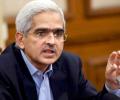
Reserve Bank of India (RBI) Governor Shaktikanta Das had stumped the market in the previous two policies - in August and in October - first with action and then with words. In August, it was the introduction of an incremental cash reserve ratio (I-CRR) to take out excess liquidity, which took the markets by surprise. In October, there was no action. Rather, what is known as "open mouth operation", Das' comment that the central bank might conduct open market operations (OMOs) by selling bonds tempered the euphoria in the bond markets after JP Morgan's inclusion of India in its Emerging Market Bond Index.

'We started affordable housing loans that has good traction and the books have grown to Rs 750 crore as of the end of last quarter.'
 © 2026 Rediff.com - Investor Information - Advertise with us - Disclaimer - Privacy Policy - Sitemap - Feedback - About us - Terms of use - Grievances